
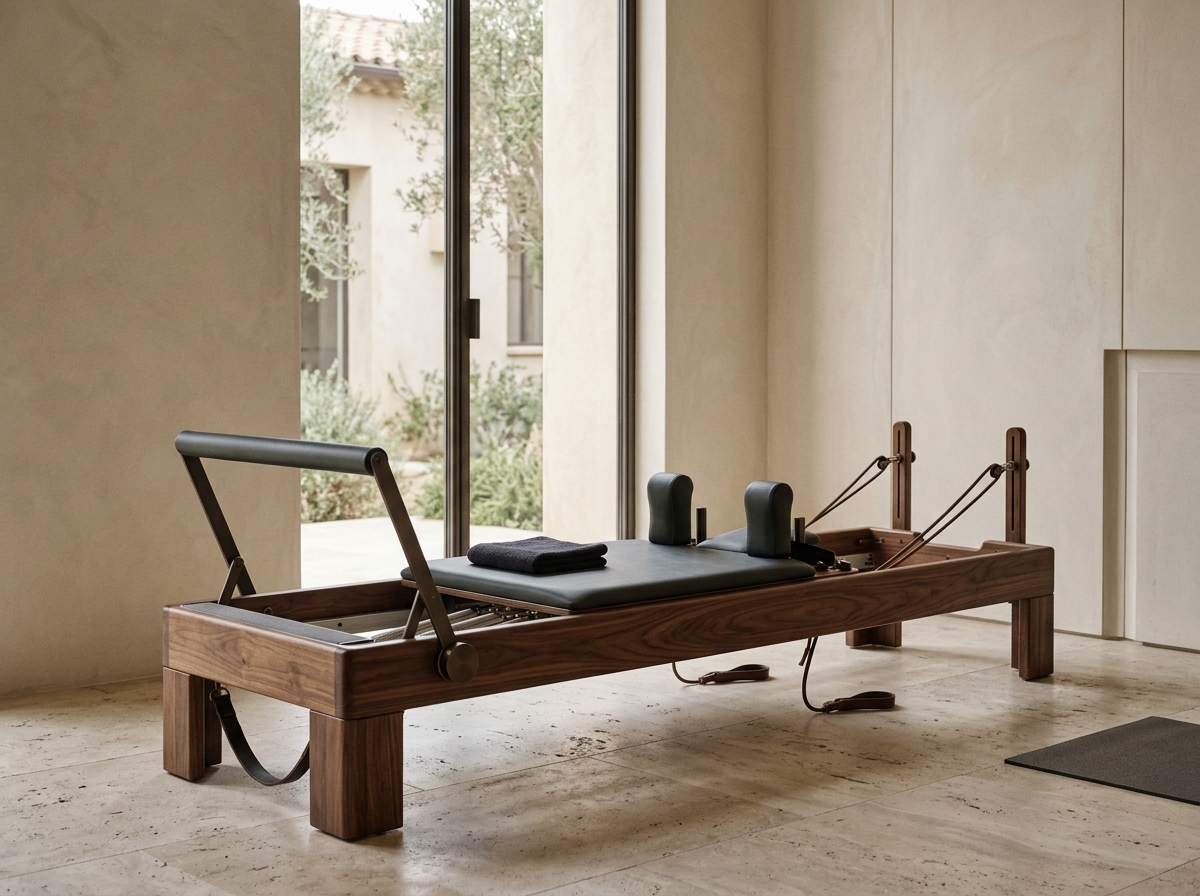
Short answer: For a 10-bed commercial studio running 7 to 10 classes per day, ordering a matched factory-direct fleet typically produces the lowest 36-month net cost once spring replacement, re-upholstery, transport, and lease interest are counted. Used Reformers look inexpensive on the listing page, yet often absorb $5,000–$11,000 in immediate refurbishment and mismatched parts before opening day. Commercial leasing protects opening-month liquidity, though 36-month payments on retail-priced beds commonly total 1.35× to 1.65× the cash price of direct factory ownership.
The three practical ways studio founders acquire a commercial Reformer fleet
When a commercial lease is signed and fit-out invoices start arriving, equipment is usually the single largest line item after construction and security deposit. Founders across Australia, the United States, the United Kingdom, and Europe almost always narrow the choice to three routes:
- Path 1 — Factory-Direct New Fleet (MOQ 6+ units): Ordering matched Nordic Maple, Heritage Walnut, or Urban Aluminum Reformers directly from a dedicated manufacturer with unified wood lacquer, matched microfiber upholstery, full accessories (sitting box, jumpboard, platform extender), and spare springs packed inside one export shipment.
- Path 2 — Secondhand Commercial Fleet (Closing Studios & Resale Market): Buying used branded Reformers from a closing studio, auction, or online classifieds. Availability is unpredictable; securing 10 identical frames in one color batch within driving distance often takes months, forcing founders to mix generations or absorb interstate moving freight.
- Path 3 — 36-to-48-Month Equipment Lease (Retail Distributor + Finance Broker): Paying a modest upfront deposit plus fixed monthly rent on domestically stocked retail Reformers. Leasing keeps cash in the operating bank account during pre-sale months, at the cost of financing fees, personal guarantees, and higher underlying retail unit prices.
36-month total cost comparison for a 10-bed Reformer studio (Market Reference)
Sticker price alone misleads studio owners because it hides freight, refurbishment, financing charges, and year-three resale value. The planning table below compares indicative 36-month cash flows for a 10-bed boutique Reformer room (excluding studio construction and rent). Exact landed quotes depend on port distance, local duties, and credit profile; review full budget line items inside our Studio Equipment Cost Guide.
| Cost Component (10 Beds, USD Ref.) | Factory-Direct New (Cash) | Used Commercial Fleet (3–5 Yrs Old) | 36-Mo Lease (Retail Brand) |
|---|---|---|---|
| Base equipment outlay (10 Reformers + boxes & jumpboards) | $14,500–$22,500 (EXW ref.) | $18,000–$28,000 (cash) | $3,800–$6,000 upfront deposit |
| Sea / domestic freight, brokerage & delivery | $3,200–$5,400 (LCL/20GP) | $1,800–$4,200 (movers/van) | $1,500–$3,200 (domestic drop) |
| Day-1 refurbishment (new springs, ropes, wheels, re-upholstery) | $0 (all factory-new) | $4,800–$10,500 | $0 (new retail units) |
| 36 monthly lease / finance payments (incl. interest) | $0 | $0 | $46,800–$64,800 ($1,300–$1,800/mo) |
| Routine wear parts over 36 months (springs, straps, pads) | $1,400–$2,200 | $2,800–$4,600 | $1,800–$3,000 |
| 36-Month Gross Cash Outflow | $19,100–$30,100 | $27,400–$47,300 | $53,900–$77,000 |
| Est. end-of-year-3 asset equity / buyout position | Owned outright (~50%–60% resale) | Owned (6–8 yrs old, ~25%–35% resale) | $1 buyout or 10%–20% balloon residual |
Note: Figures above are indicative planning ranges assembled from international freight benchmarks and commercial studio budgets, not a binding quote. Model your exact room yield and payback months inside the Studio ROI & Payback Calculator.
Five hidden refurbishment costs that turn cheap used Reformers expensive
Buying secondhand equipment from a home user is very different from buying a fleet pulled out of a busy commercial studio. A Reformer running 45 classes per week logs roughly 2,300 client hours per year. After three to four years, five wear zones almost always need immediate work before paying clients lie down on the carriage:
- Complete spring replacement ($180–$280 per bed): Mixed-age springs lose uniform tension and develop coil separation near the hooks. Running an unverified spring set in a commercial studio is a direct client safety hazard. For 10 beds, a fresh 50-spring set plus shipping quickly adds $1,800–$2,800.
- Upholstery re-skinning and foam compression ($260–$450 per bed): Sweat, body oils, and alcohol-heavy wipes harden vinyl seams and flatten carriage foam along the shoulder block and headrest zone. Re-upholstering 10 carriages, 10 sitting boxes, and 10 headrest pads locally in Australia, the US, or the UK routinely runs $3,000–$4,500 — and still leaves scuffs on the wood rails.
- Carriage wheels, bearings, and side-guide rollers ($90–$160 per bed): Flat-spotted polyurethane wheels and gritty bearings create audible rumble across quiet stretching blocks. If the aluminum track inside the frame is scored from years of dry metal contact, new wheels alone will not restore silent glide.
- Mismatched hardware across generations: Closing studios frequently expanded in waves — six beds bought in 2019 and four more added in 2022. Slightly different footbar angles, gearbar increments, or rope cleat styles force instructors to waste precious class minutes resetting beds between clients.
- Zero warranty and discontinued spare parts: Most domestic retail warranties apply strictly to the original buyer. When a footbar locking pin or proprietary carriage bracket cracks six months after opening, waiting four weeks for an out-of-production part sidelines one revenue seat — costing $600–$1,100 in lost class bookings every week that bed sits empty.
Equipment leasing vs. buying factory-direct: cash preservation vs. monthly burn
Leasing exists for a genuine financial reason: opening a studio requires heavy cash before the first membership draft hits your bank account. Between lease bond, acoustic flooring, mirrors, signage, and pre-sale Meta ads, preserving $20,000–$30,000 in working capital can be the difference between a calm ramp-up and running dry in month three.
The trap is leasing over-priced domestic retail Reformers at 10%–16% implied APR when you actually have access to a lower-cost business line of credit or sufficient seed capital. Adding $1,500–$1,800 per month in fixed equipment lease obligations raises your studio break-even occupancy by 5 to 8 percentage points every single month for three years. In shoulder seasons (January post-holiday dips or August travel weeks), a debt-free equipment floor absorbs slower bookings effortlessly; a leveraged lease does not.
Before signing any equipment finance agreement, check three clauses carefully: whether the lease carries a personal guarantee against your home equity, whether early payout penalties waive unearned interest or charge the full remaining stream, and whether the end-of-term residual is a $1 nominal buyout or a 15%–20% fair-market-value balloon. Compare how fixed equipment costs shift your monthly operating margin in our Pilates Studio Profitability & Unit Economics Guide.
Residual value, brand consistency, and multi-site expansion equity
Commercial Pilates frames hold value far better than motorized cardio machines because they contain no circuit boards, touchscreens, or belt motors that become obsolete in 36 months. A kiln-dried North American maple or heavy-wall anodized aluminum Reformer maintained on a proper spring-and-rail schedule routinely serves 7 to 10+ years of studio life.
That longevity creates real balance-sheet equity if you buy new and own your fleet cleanly. When you open Site #2 eighteen months later, matching the exact timber finish, upholstery grain, and carriage resistance curve of Site #1 keeps instructor choreography identical across locations — and if you eventually sell the studio as a going concern, an owned, visually cohesive fleet commands a noticeably higher business valuation than a leased or mismatched room. Review matched multi-bed bundles on our Studio Equipment Packages page.
Decision matrix: when each path actually makes commercial sense
No single acquisition model fits every balance sheet. Use this practical checklist to match your cash position and opening timeline to the right procurement structure:
- Choose Factory-Direct New (Cash or Low-Rate Bank Facility) when you have a 10-to-14 week lead window before opening, want a matched 6-to-16 bed visual identity, plan to hold the lease for 3+ years, and want equipment payback in 3 to 5 months of operation rather than 10+ months.
- Choose Used Commercial Reformers only when you can physically inspect every frame before paying, confirm all beds belong to the exact same production generation, secure at least a 45%–55% discount off landed new cost after deducting fresh springs and upholstery, and need beds installed inside 14 days.
- Choose Equipment Leasing when you are opening a high-rent flagship where preserving $30,000+ of liquid marketing and runway reserve is non-negotiable, or when local tax rules allow immediate operating-lease write-offs that your accountant confirms beat capital depreciation.
Frequently asked questions on buying new, used, or leasing Reformers
What is the biggest inspection red flag when looking at used commercial Reformers?
Push the unloaded carriage slowly along the entire track with no springs attached. Any rhythmic clicking, gritty resistance, or lateral wobble indicates worn rail channels, warped wooden side rails, or damaged bearing races — repairs that rarely make sense compared to buying new frames.
Can I finance a factory-direct order from overseas?
Direct overseas factory orders typically work on a 30% production deposit and 70% balance prior to shipment after pre-shipment QC video sign-off. Many studio owners fund that purchase using a domestic small-business equipment loan, SBA/startup facility, or commercial credit line so they keep factory-direct pricing without paying retail distributor markups.
How many spare parts should I include when buying a new fleet directly?
Order 10%–15% extra springs (matched across heavy, medium, and light tensions), 2 spare sets of carriage wheels, 4 extra rope sets, and 4 spare double-loop straps in the same container. Packing wear parts inside your opening shipment costs almost zero extra freight and prevents mid-year downtime.
Summary: compare 36-month net cost, not day-one sticker price
Buying used Reformers can work for a 2-bed home-studio startup that inspects every bolt in person, while leasing can bridge a tight flagship build-out when working capital is scarce. For most 6-to-16 bed commercial studios planning ahead by 12 to 14 weeks, purchasing a new matched factory-direct fleet delivers lower 36-month total cost, zero day-one refurbishment surprises, consistent member experience, and full asset ownership from day one. Estimate your exact landed freight and container volume in our Container & CBM Freight Calculator or request a formal factory proforma directly.
Get a Direct Factory Quote to Benchmark Against Local Quotes
Send your bed count and destination port for an itemized EXW / CIF comparison sheet covering frames, accessories, spare springs, and export crating.
Leave a Comment or Ask a Studio Question
Only your email address is required (never published). Your note is forwarded straight to our team for review and email follow-up.