
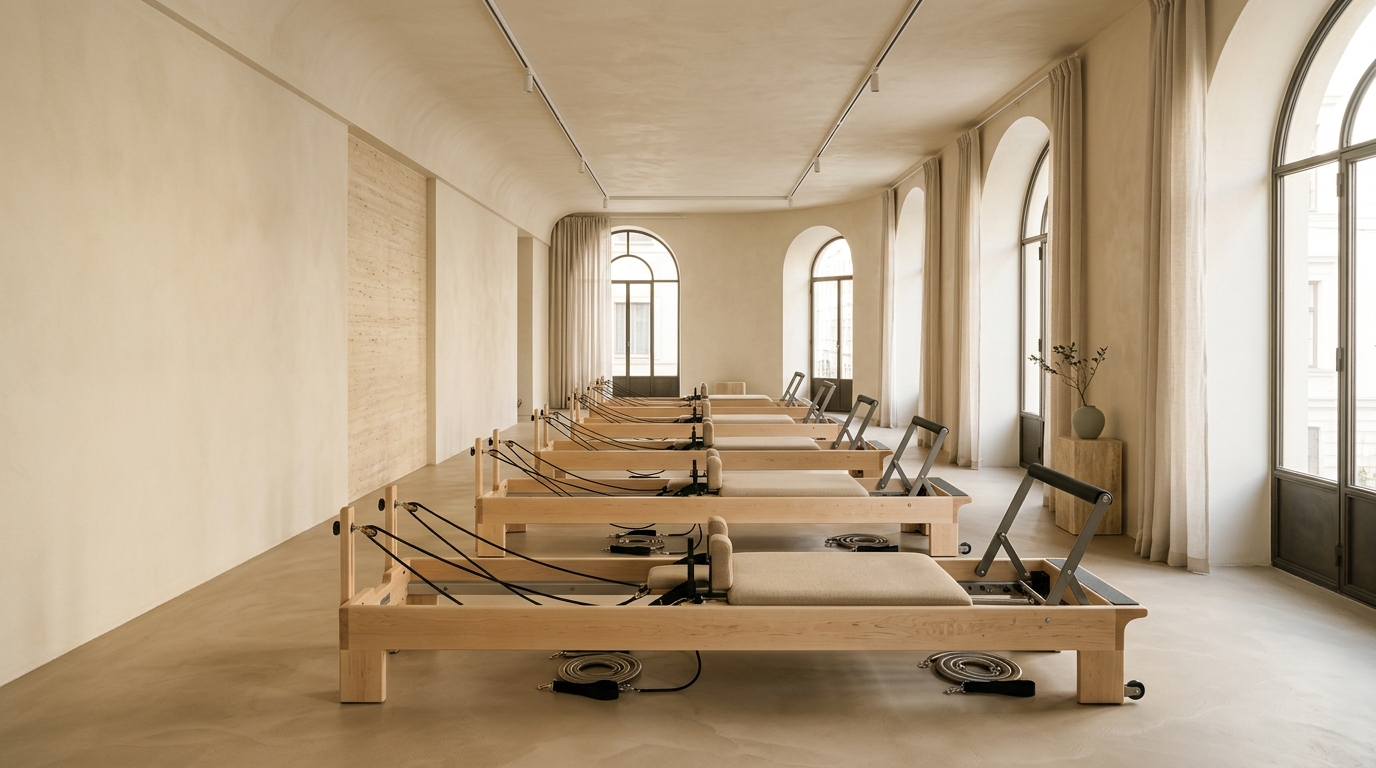
Short answer: Most profitable independent Reformer Pilates studios open with 6 to 12 beds inside 60 to 130 m² of net training floor. If you source machines directly from the manufacturing floor instead of paying retail distributor markups, work backward 12 to 14 weeks before opening day so physical swatch sign-off, single-batch production, glide video inspection, ocean freight, and instructor onboarding finish inside your rent-free fit-out window.
Choose your studio format before signing a lease
The most expensive mistake new owners make is signing a lease on an attractive empty shell, then discovering structural columns, awkward doors, or low ceilings cut workable capacity from 10 beds down to 7. Those three lost seats often decide whether a timetable generates surplus or barely covers rent.
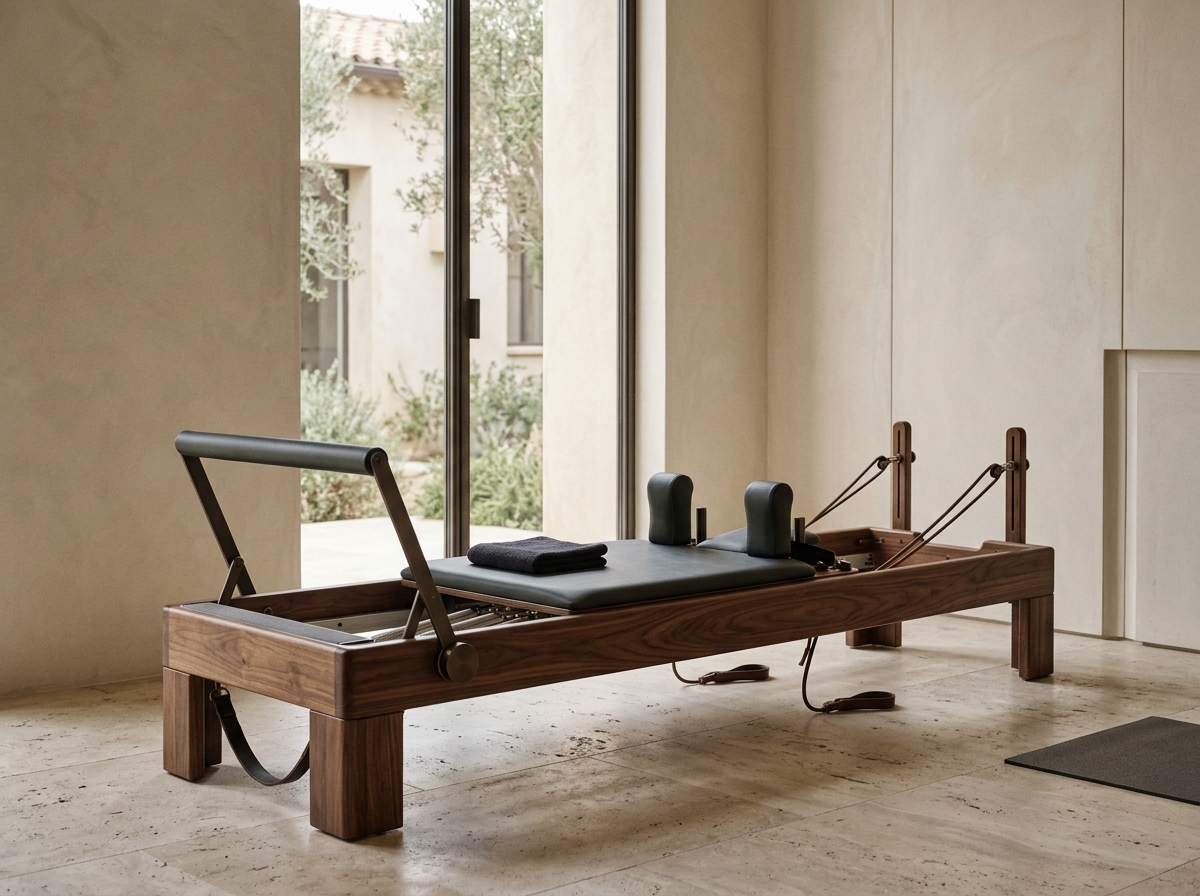
- Boutique Group Studio (6–8 Reformers, 55–80 m² net): Lower startup capital, personal coaching feel, strong fit for neighborhood high streets and hotel wellness suites. Usually equipped with solid maple Reformers or dark walnut frames.
- Core Commercial Studio (10–12 Reformers + 2 Private Pieces, 90–130 m² net): The commercial sweet spot across Melbourne, Sydney, London, and major US suburbs — high enough group throughput to absorb commercial rent, plus Half-Trapeze Towers or a private Cadillac table to monetize midday hours.
- High-Volume Flagship or Multi-Use Hall (14–16+ Beds, 145–190 m² net): Engineered for 10–12 classes daily. Operators frequently specify anodized aluminum Reformers for low timber upkeep, or foldable commercial Reformers when one room alternates between Reformer, mat, and barre classes.
Check room clearance, elevators, and crate access early
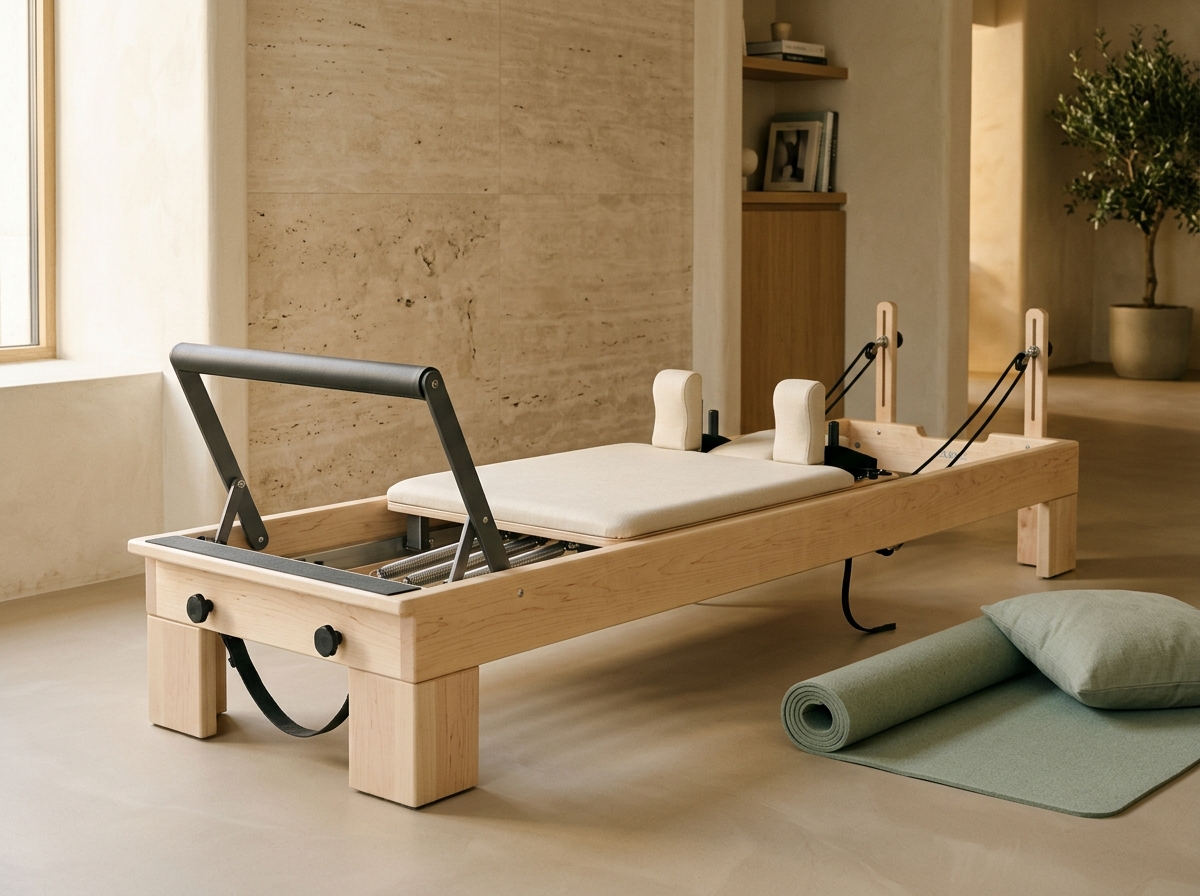
A commercial Reformer measures roughly 2.40 m long × 0.72 m wide, yet every bed requires 8–10 m² of net floor area in a group room (or 10–12 m² in a wider boutique layout) once you leave 0.8 m side clearance for standing legwork, 1.0 m at the footbar and pulley ends, and an instructor walkway. Verify your exact square footage in our Studio Space & Equipment Planner or check every apparatus footprint in the equipment dimensions & layout guide.
Line-by-line startup budget across 6, 10, and 16 beds
Real launch budgets vary heavily by city rent and buildout scope, so separate controllable equipment cost from local lease and renovation spend. The indicative planning ranges below reflect sourcing a coordinated factory-direct studio package (MOQ 6+ units):
| Budget Line (Indicative Range, USD) | 6-Bed Boutique (60 m²) | 10-Bed Commercial (105 m²) | 16-Bed Flagship (160 m²) |
|---|---|---|---|
| Equipment Package (Indicative Factory EXW)* | $4,200 – $6,400 | $8,200 – $12,500 | $13,500 – $20,500 |
| Ocean Freight, Customs & Tail-Lift Delivery | $1,800 – $3,200 (LCL) | $3,200 – $5,500 (20GP) | $4,800 – $7,800 (40HQ) |
| Lease Deposit, Flooring, Mirrors & Lighting | $12,000 – $28,000 | $25,000 – $55,000 | $45,000 – $95,000 |
| Booking Software, Legal, Insurance & Signage | $3,500 – $6,500 | $5,000 – $9,500 | $8,000 – $15,000 |
| Pre-Launch Ads & Founding Member Campaign | $2,500 – $5,000 | $4,500 – $9,000 | $7,500 – $15,000 |
| Working Capital Buffer (3 Months Runway) | $10,000 – $18,000 | $18,000 – $35,000 | $32,000 – $60,000 |
*EXW bands are non-binding planning references. Final quotes depend on timber species, upholstery dye lot, custom branding, and final apparatus mix.
Direct factory packages vs. overseas retail brands
Traditional retail Pilates brands often list commercial Reformers at $3,500–$6,500+ each once regional distributor overhead is layered in. On a 10-bed launch, retail pricing absorbs $45,000–$65,000 before mirrors, HVAC, or flooring are touched.
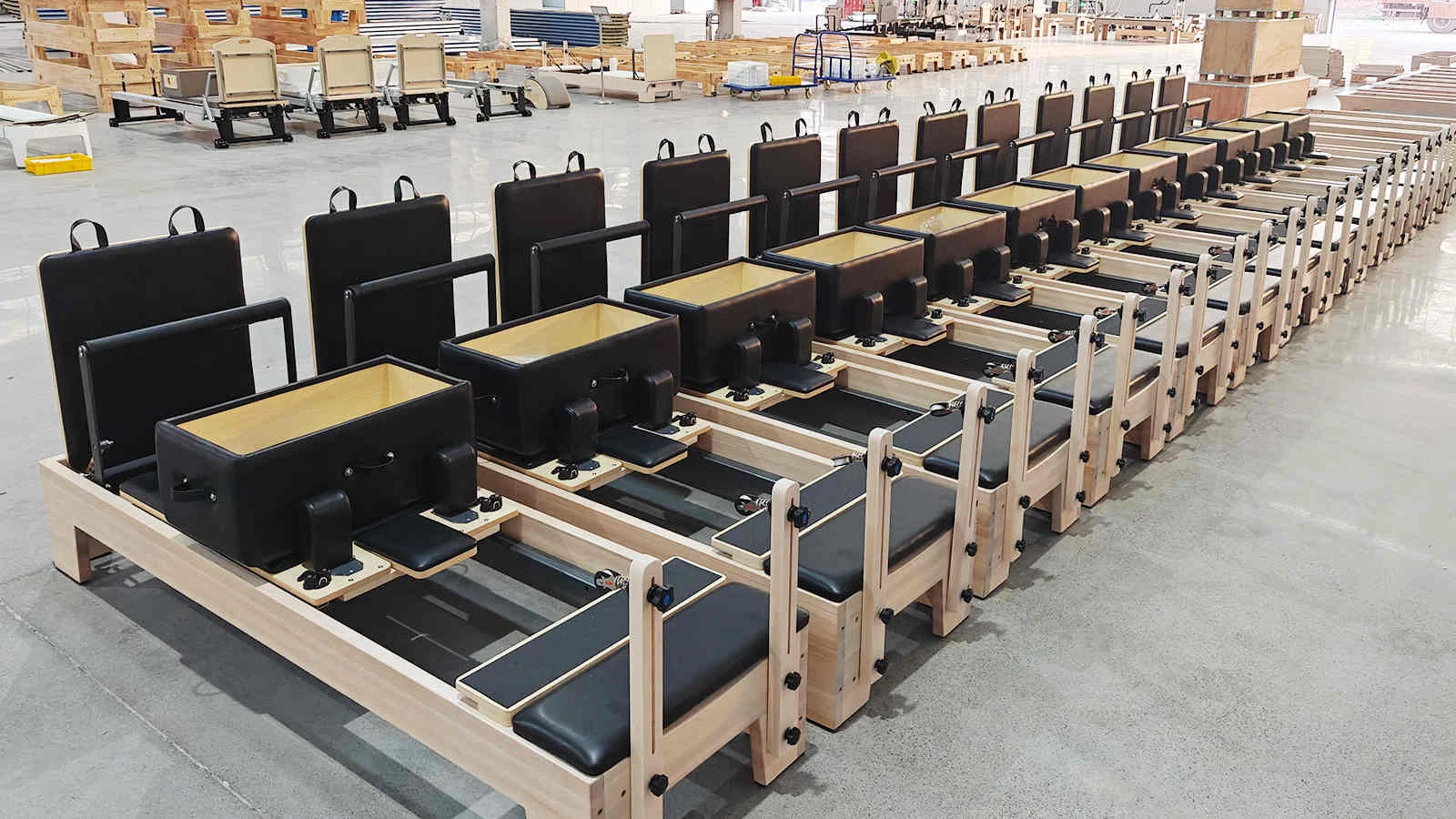
Ordering direct from the production floor (once you hit the 6-unit commercial minimum) cuts equipment capital sharply, guarantees all beds come from one timber-staining batch, and allows custom metal brand plates through our OEM & private-label program. Compare exact payback months in our Studio ROI Calculator.
Work backward: your 14-week factory-to-opening calendar
Commercial rent starts counting the moment your rent-free buildout window expires. Ordering equipment on a clean reverse schedule ensures crates land right after flooring and mirrors finish:
| Timeline | Milestone | Key Actions to Lock |
|---|---|---|
| Weeks 1–2 | Floorplan, Swatches & Deposit | Lock bed counts in Studio Planner, review physical wood and microfiber swatches, and approve nameplate vector files. |
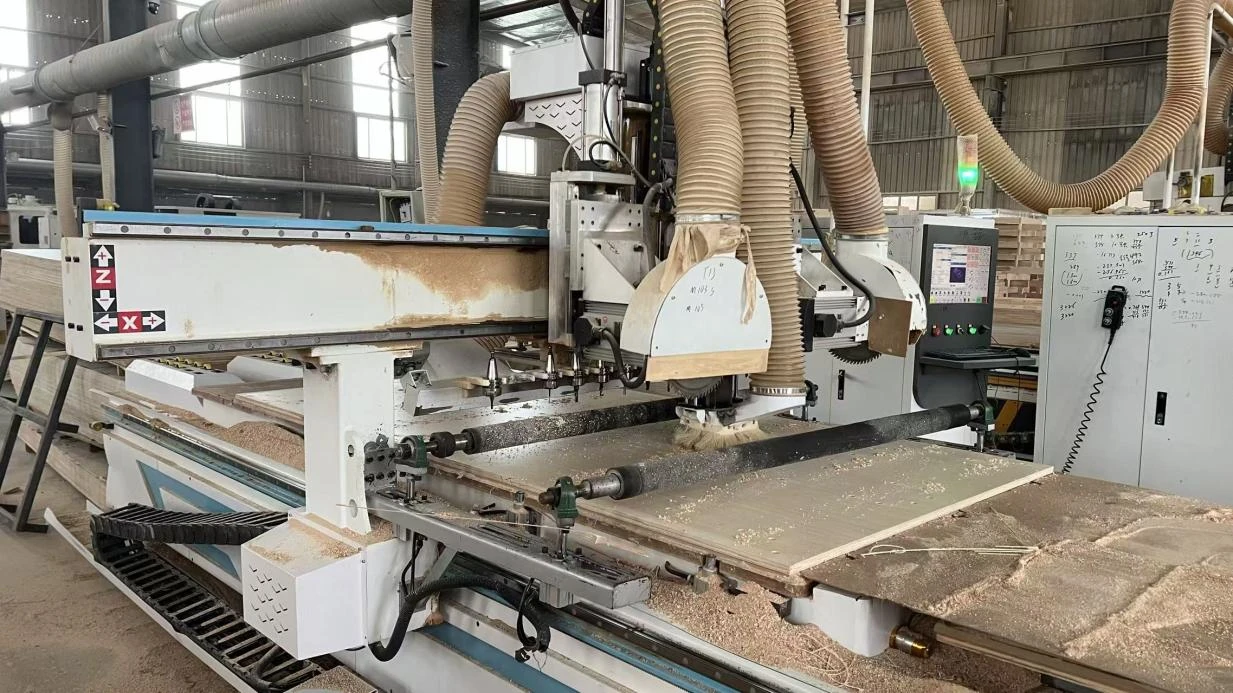
| Weeks 3–6 | Single-Batch Workshop Build | CNC milling, matched lacquer spraying, upholstery stitching, track and spring assembly across our 6 workshop stages. |
| Week 7 | Glide Video QC & Crating | Inspect walk-around carriage glide videos before balance payment; confirm ISPM-15 fumigation-free plywood crates and spare-parts carton. |
| Weeks 8–12 | Ocean Freight & Customs | Sailing typically runs ~14–22 days to Australia/US West Coast and ~28–38 days to UK/EU while mirrors, lighting, and instructor hiring finish. |
| Weeks 13–14 | Uncrating, Setup & Soft Launch | Install risers/towers, check spring tension clips, run staff test classes, and launch founding-member preview week. |
Instructors, insurance, zoning, and music licensing
Equipment alone does not fill a timetable — great certified instructors and clean local compliance keep your doors open smoothly from week one:
- Certified instructors: Start recruiting 6–8 weeks before launch. Decide early whether you pay a flat class rate or a base rate plus per-head bonus above 60% fill.
- Commercial use zoning: Confirm your lease allows group fitness / boutique studio use (for example Use Class E in England, local council fitness consent in Australia, or municipal commercial occupancy permits in the US) before paying a deposit.
- Insurance & waivers: Carry public liability, professional indemnity, and equipment cover, plus lawyer-reviewed digital liability waivers inside your booking platform.
- Background music licensing: Playing commercial playlists in class requires public performance licensing (such as OneMusic in Australia, PPL PRS in the UK, or ASCAP/BMI/Soundtrack Business in the US).
Price your classes and run founding-member presales
Do not wait until grand opening day to sell your first membership. Open a simple presale landing page 4–6 weeks before launch offering a capped “Founding 50” recurring membership at 15%–20% below standard monthly pricing. Those early recurring billings often cover your first two months of rent before day one.
Balance your pricing ladder across intro 3-packs (low friction for first-timers), 10-class packs, and weekly/monthly auto-pay memberships — and test your break-even fill rate in our Pilates studio profitability & business model guide.
Costly first-year mistakes we see studios make
- Skipping single-batch finish confirmation: Buying extra beds months later from a different vendor almost always creates mismatched maple stains and different upholstery grains under daylight.
- Ignoring climate and cleaning wear: Compare how solid maple and anodized aluminum handle humid coastal air or heated classes in our wood vs. aluminum comparison.
- Forgetting on-site spare parts: Shipping one broken carriage bearing or spring by air courier later costs more than the part itself — always pack a spare-parts kit inside your initial ocean crate.
- Using non-compliant raw wood crates: Australia (DAFF) and UK/EU/US customs flag untreated raw timber immediately. Always require fumigation-free engineered plywood crates.
- Under-budgeting midday dead hours: Adding two Half-Trapeze Towers or a Split-Pedal Wunda Chair lets you sell high-margin midday private sessions when group beds sit quiet.
Questions studio founders ask us
Can I inspect physical wood and leather swatches before ordering 6–16 beds?
Do I need a special import license to ship a studio package to Australia, the US, or the UK?
How many spare springs and bearings should I pack for a 10-bed studio?
Summary: the clean sequence to open on time and on budget
Opening a Reformer Pilates studio comes down to sequencing four decisions in the right order: verify net bed capacity before signing your lease, protect startup cash by sourcing coordinated commercial equipment directly from the factory, lock production 12–14 weeks ahead of launch so ocean freight lands inside your rent-free window, and presell founding memberships before day one so the timetable opens with immediate cash flow.
Once your floorplan and rough budget feel solid, draw up your exact equipment mix in the Studio Planner and sanity-check payback months in the ROI Calculator before requesting physical swatches and confirmed factory EXW pricing.
Map Your Room & Request Physical Swatches
Plug your net floor area into the Studio Planner to inspect bed counts and crate volume, or send your opening date and destination port for confirmed factory EXW tiers (MOQ 6+ units).
Leave a Comment or Ask a Studio Question
Only your email address is required (never published). Your note is forwarded straight to our team for review and email follow-up.