
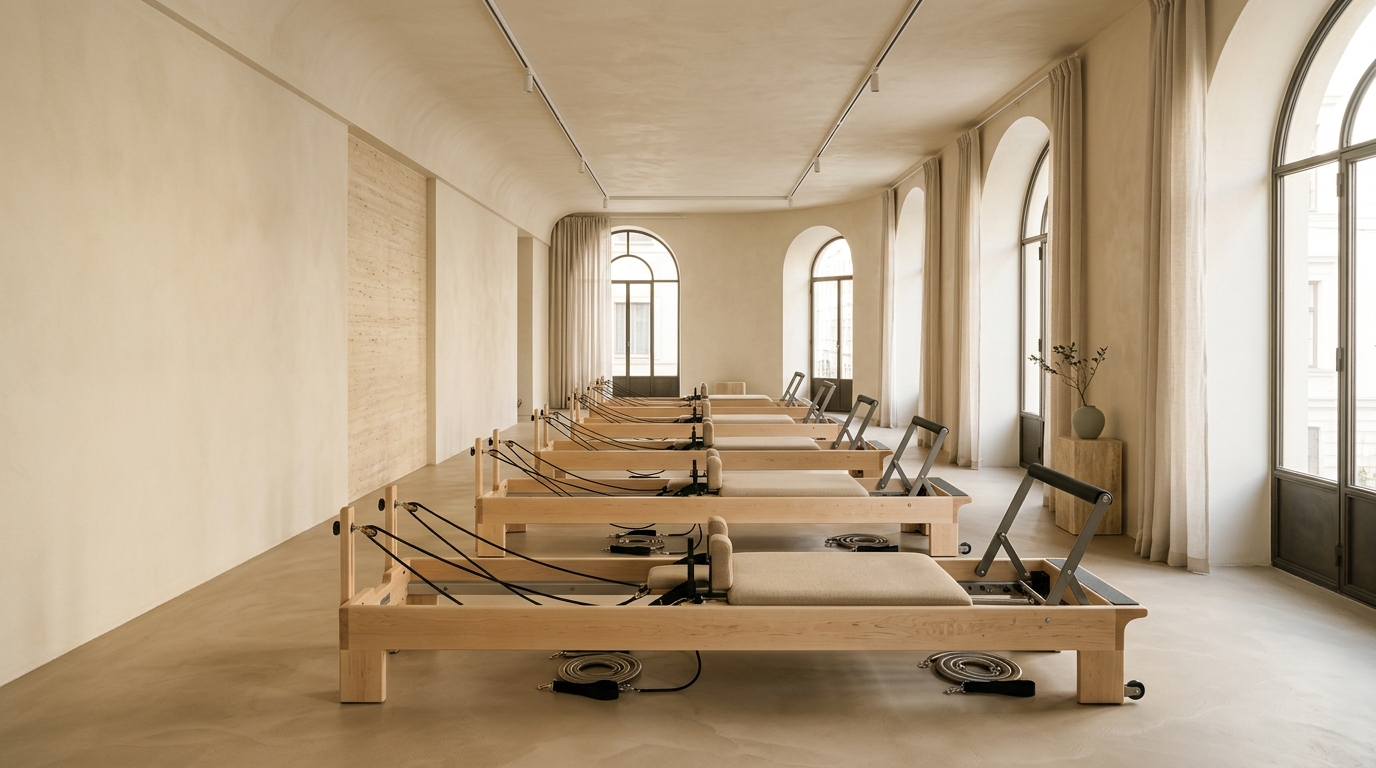
Direct answer: Most commercial group Pilates studios allocate 8–10 m² (86–108 sq ft) of net training floor per Reformer. For a 10-Reformer floor (~90–115 m²), indicative factory EXW equipment budgets typically start around USD 5,800–8,500 — landing roughly USD 11,500–18,000 once ocean freight, ISPM-15 plywood crating, customs clearance, and local tail-lift delivery are added. Compare that against USD 38,000–60,000+ for traditional overseas retail brand list prices.
Conservative floor space benchmarks by studio tier
Never budget machines off gross retail square meters without deducting reception, lockers, and restrooms (typically 20%–30% of lease area). Use the net training benchmarks below to anchor bed count before requesting quotes — or check exact room width formulas in our dimensions & layout guide:
| Net Training Area | Standard Group (8–10 m²/bed) | Spacious Boutique (10–12 m²/bed) | Suggested Core Mix |
|---|---|---|---|
| 55–70 m² (600–750 sq ft) | 6–8 Reformers | 5–6 Reformers | 6 Nordic Maple Reformers + Spares Kit |
| 90–115 m² (970–1,240 sq ft) | 9–12 Reformers | 8–10 Reformers | 8 Nordic Maple + 2 Maple Tower Reformers |
| 145–180 m² (1,560–1,940 sq ft) | 14–20 Reformers | 12–16 Reformers | 12 Urban Aluminum + 4 Maple Tower Reformers |
Indicative factory EXW ranges vs. overseas retail pricing
The table below shows transparent planning ranges (MOQ 6+ units) so studio founders and regional importers can budget realistically before requesting formal quotations. Confirmed factory prices depend on wood species, alloy extrusion, upholstery colorway, and order tier:
| Commercial Apparatus | Indicative EXW Range (USD) | Typical Overseas Retail | Packed Volume | Model Page |
|---|---|---|---|---|
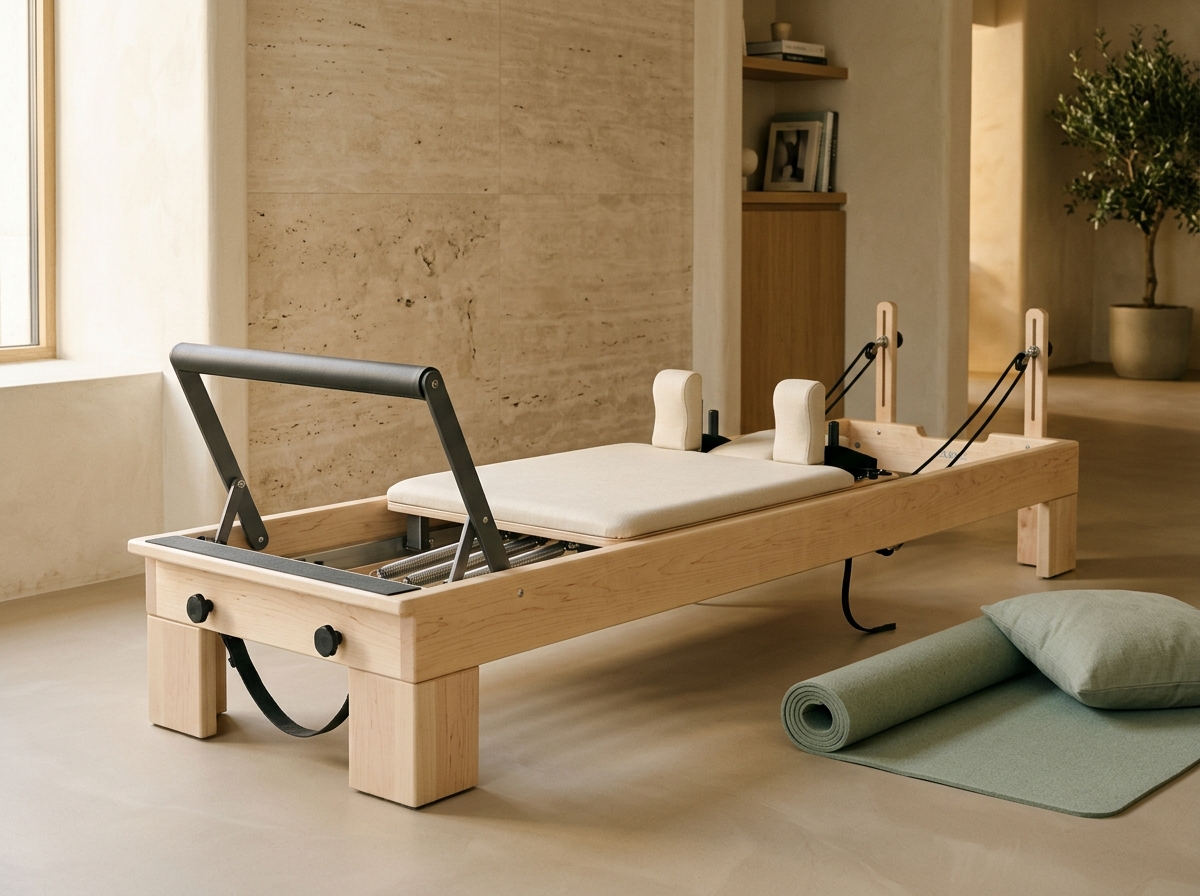
| Nordic Maple Commercial Reformer | $520 – $700 | $3,600 – $5,800 | 1.00 – 1.15 CBM | Specs → |
| Urban Anodized Aluminum Reformer | $460 – $720 | $3,500 – $5,200 | 0.80 – 1.00 CBM | Specs → |
| Maple Reformer with Tower | $690 – $960 | $5,400 – $7,900 | 1.05 – 1.35 CBM | Specs → |
| Studio Cadillac Trapeze Table | $980 – $1,450 | $5,500 – $8,500 | 1.45 – 1.75 CBM | Specs → |
| Split-Pedal Wunda Chair / Ladder Barrel | $180 – $360 | $1,100 – $2,100 | 0.28 – 0.45 CBM | Specs → |
Understanding Incoterms: EXW vs. FOB Xiamen vs. CIF vs. DDP
Comparing two supplier quotes without checking the Incoterm is the #1 source of surprise freight bills. Here is who pays and carries risk under each trade term:
| Incoterm | Factory Covers | Buyer Covers | Best Fit For |
|---|---|---|---|
| EXW | Manufacturing & workshop crating only | Origin trucking, export clearance, ocean freight, duties & delivery | Buyers with a China sourcing agent or multi-factory consolidation |
| FOB Xiamen | Production, crating, local port trucking & China export customs | Ocean freight, marine insurance, destination customs & delivery | Experienced importers & distributors using their own forwarder |
| CIF | Everything in FOB + ocean freight & insurance to destination port | Destination port THC, customs clearance, duty/GST/VAT & trucking | Mid-size studio orders with a local licensed customs broker |
| DDP | Door-to-door logistics including customs clearance & taxes* | Curbside receiving & studio uncrating/assembly | First-time studio founders wanting one predictable landed number |
*DDP availability and duty estimates are quoted per destination country (AU, US, UK, EU) based on live tariff schedules at shipment booking.
LCL vs. 20GP / 40HQ ocean container math
Commercial Pilates machines are bulky rather than heavy, so cubic volume (CBM) controls shipping economics:
- 6–9 Bed Studio (LCL Consolidated Freight, ~7–10 CBM): Ships inside individual ISPM-15 fumigation-free plywood crates via shared container space. Budget roughly $1,800–$3,500 including destination terminal handling and broker clearance.
- 12–22 Units (Dedicated 20GP Container, ~28 CBM usable): Eliminates shared-crate rehandling at port warehouses and drops per-bed freight sharply — typically $2,800–$5,500 port to port depending on route and season.
- Multi-Site Rollouts & Distributors (40HQ High Cube, ~68 CBM usable): Fits 45–60+ mixed Reformers, Towers, Chairs, and Barrels with the lowest landed freight cost per machine. Compare aluminum vs. maple crate density in our wood vs. aluminum guide.
Customs duties, local taxes, drayage, and uncrating costs
Four destination charges often surprise first-time studio importers if left out of the initial budget sheet:
- Customs brokerage & entry filing ($150–$500): Hire a licensed destination broker before vessel departure so ISF / biosecurity filings clear without port storage demurrage.
- Import duty & GST/VAT: Fitness apparatus enters under standard gymnastics / exercise equipment HS codes. Baseline duties vary by country and active trade tariffs, while local GST (Australia 10%) or VAT (UK/EU ~20%) is normally recoverable if your studio is GST/VAT-registered.
- Port drayage & tail-lift truck ($450–$1,200): Standard 40ft container chassis cannot park on narrow retail high streets; plan devanning into a tail-lift box truck with a pallet jack.
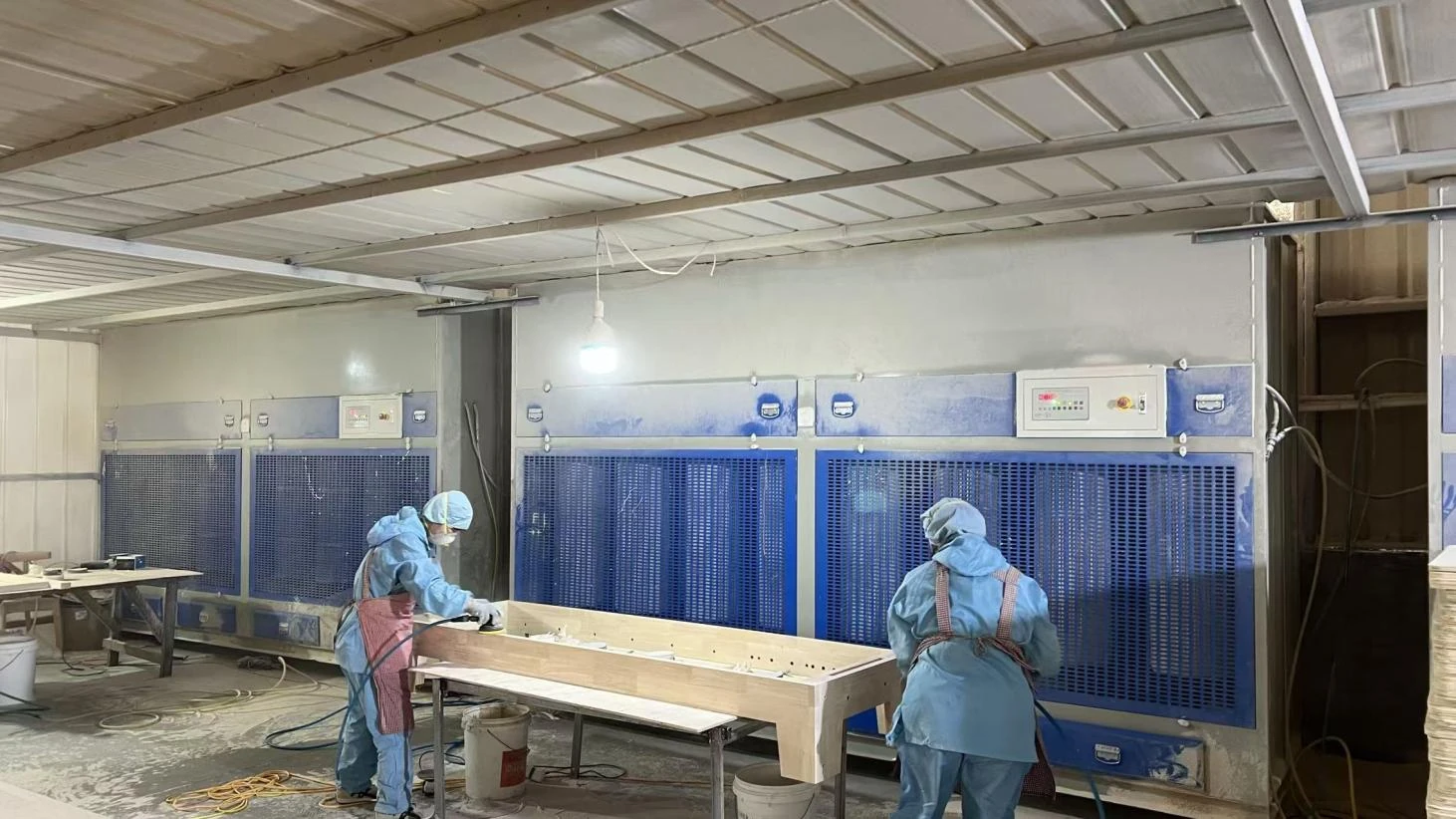
- Uncrating & plywood disposal ($400–$1,000): Budget two to three helpers for half a day to unbolt crates, position frames, fit towers/risers, and recycle scrap plywood.
What moves your confirmed factory quote up or down
Four straightforward levers shape your final EXW tier: solid hardwood species (North American maple vs. smoked walnut), anodized aluminum vs. timber chassis, custom upholstery dye lots or laser-etched brand nameplates under our OEM & private-label program, and total batch quantity (6–10 studio packages vs. 20GP/40HQ distributor container runs). Always include a small spare-parts bundle (extra springs, bearings, straps) inside the same crate — see our QC & crating workflow.
Frequently asked questions on studio equipment costs & imports
How much does it cost to equip a 10-Reformer Pilates studio from a factory?
Is it worth importing fewer than 6 Reformers by sea freight?
Should a first-time studio owner ask for FOB or DDP pricing?
Summary: build your landed budget in three clean steps
Start by locking realistic bed capacity from your net floor area in the Studio Planner, compare factory-direct vs. retail payback months in the ROI Calculator, and request both a written EXW/FOB quotation (with exact crated CBM) and physical finish swatches at least 12–14 weeks before opening day (see our full 14-week opening guide).
Model Your Exact Room, Crate CBM & Payback
Configure a custom mix of Reformers, Towers, and Chairs, then request confirmed factory EXW / FOB Xiamen pricing and physical material swatches.
Leave a Comment or Ask a Studio Question
Only your email address is required (never published). Your note is forwarded straight to our team for review and email follow-up.