
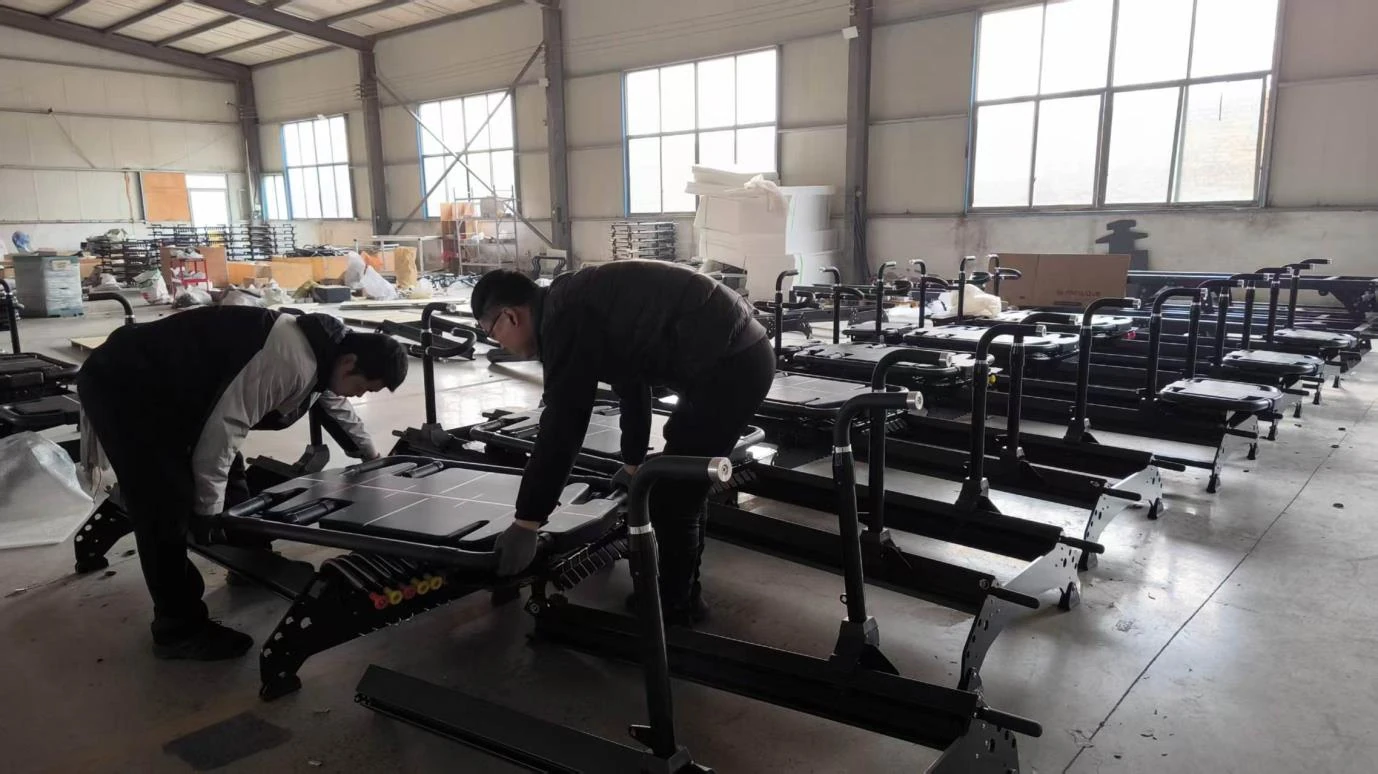
Short answer: In online product photos, a $650 consumer home Reformer and a commercial studio Reformer can look deceptively similar. Under real studio duty — 8 to 12 classes a day, 150 kg dynamic jumpboard loads, and constant disinfectant wiping — the mechanical differences show up within weeks. Commercial machines rely on 65–78 kg kiln-dried timber or thick-wall anodized alloy frames, recessed extruded aluminum tracks, 8-wheel sealed bearing carriages, calibrated music-wire springs, and high-rebound studio foam that home beds strip out to hit retail parcel shipping weights.
The load math: 3 workouts a week vs. 2,500 client hours a year
A consumer home Reformer is engineered around two constraints: fitting inside a courier-deliverable cardboard carton under 35–42 kg, and surviving 3 to 5 gentle workouts per week by one owner. That translates to roughly 180 usage hours per year.
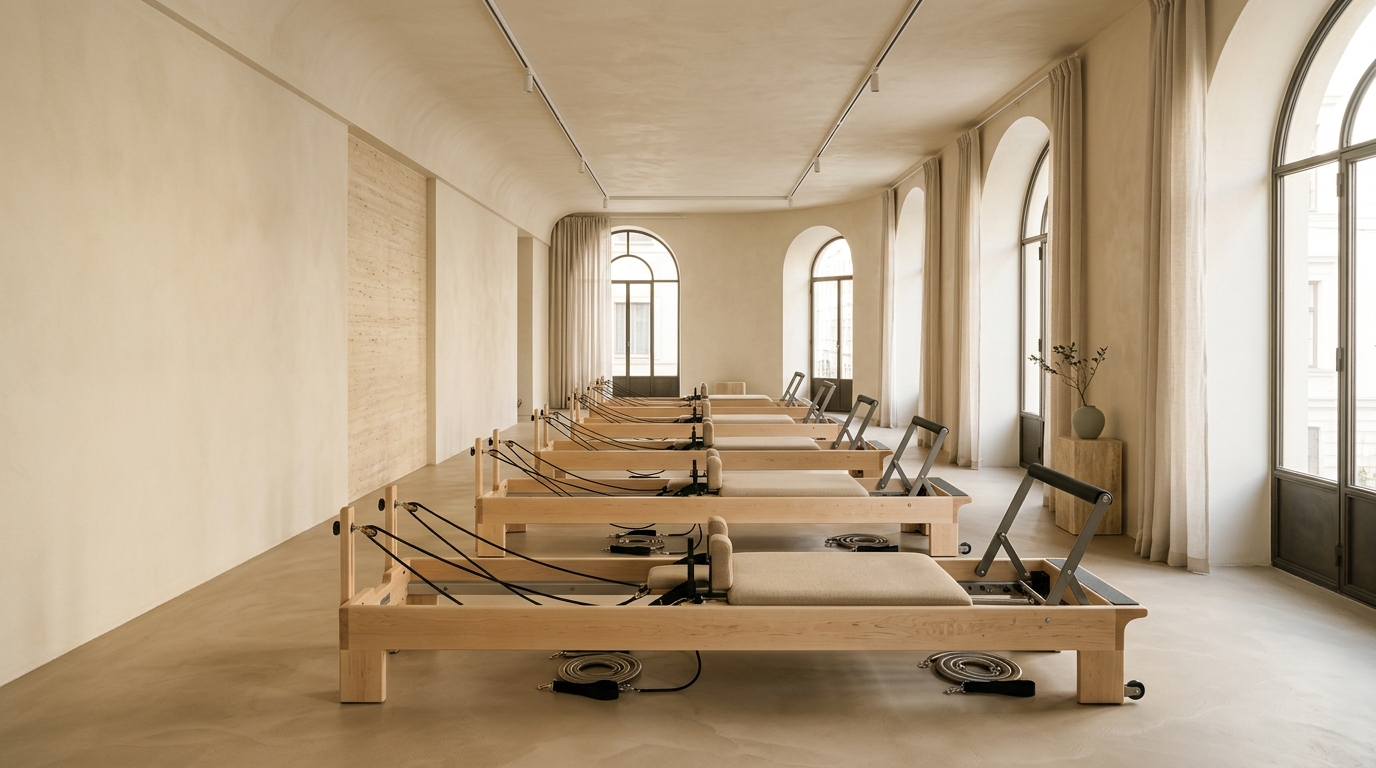
A commercial studio bed operating 8 classes per day across 6 days per week logs 2,496 paid client hours per year — nearly 14 times the annual cycle load, driven by bodies ranging from 45 kg to 120+ kg pushing off jumpboards, standing on platforms, and snapping springs repeatedly. Putting consumer-grade hardware into a paying studio creates squeaky carriages, wobbling footbars, voided commercial liability insurance, and premature full-fleet replacement inside nine months.
7-point mechanical comparison: commercial studio vs. consumer home Reformer
When comparing manufacturer spec sheets — especially before importing — ask for exact measurements on these seven assemblies rather than relying on marketing adjectives:
| Mechanical Assembly | Consumer / Home Reformer | Commercial Studio Reformer (PILORA Grade) |
|---|---|---|
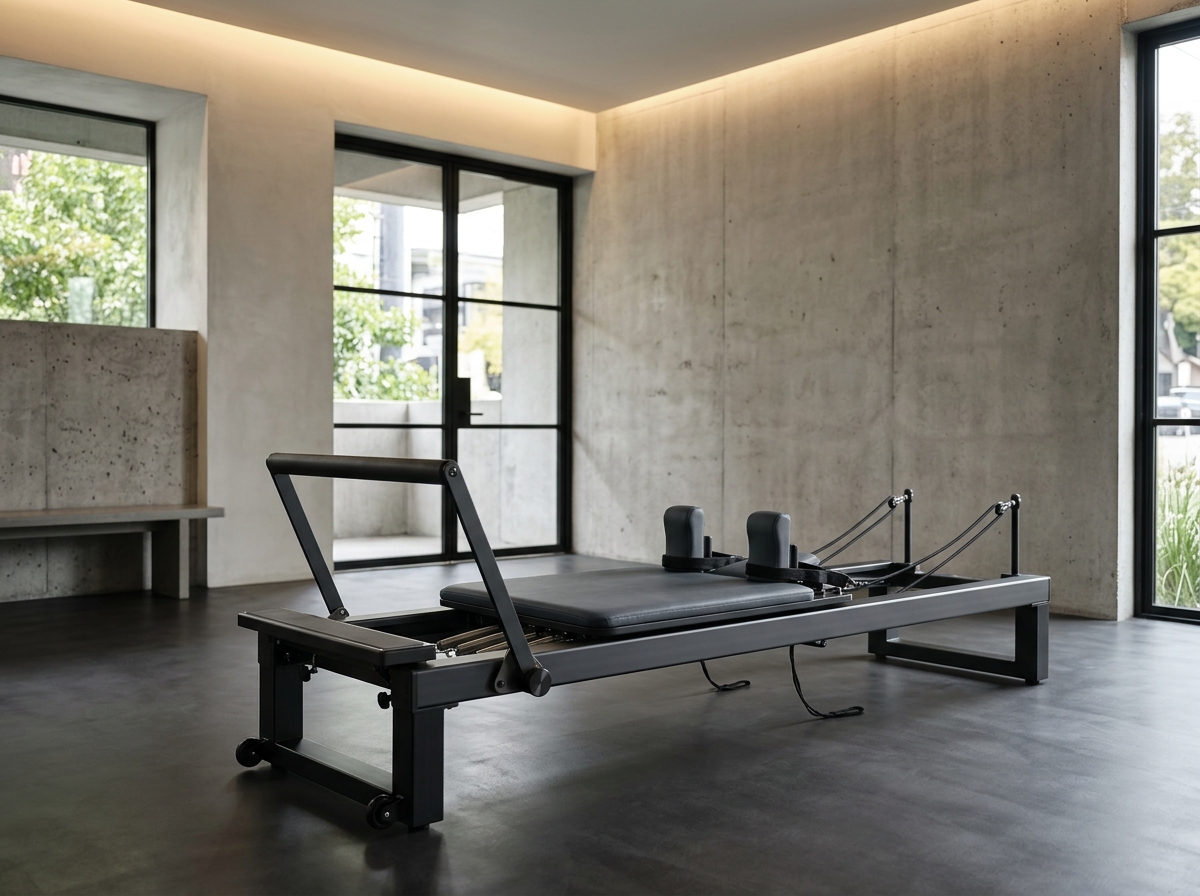
| Frame structure & net weight | Thin laminated pine/ply or light tubing (~32–44 kg) | Solid kiln-dried maple/walnut or heavy anodized alloy (58–78 kg) |
| Carriage track rail | Painted steel channel or open C-track prone to chipping | Thick-wall anodized extruded aluminum track with dust-shield recess |
| Carriage wheel & bearing system | 4 plastic rollers on loose bushings; noisy lateral play | 8 polyurethane wheels (4 vertical load + 4 side-stabilizers) on sealed bearings |
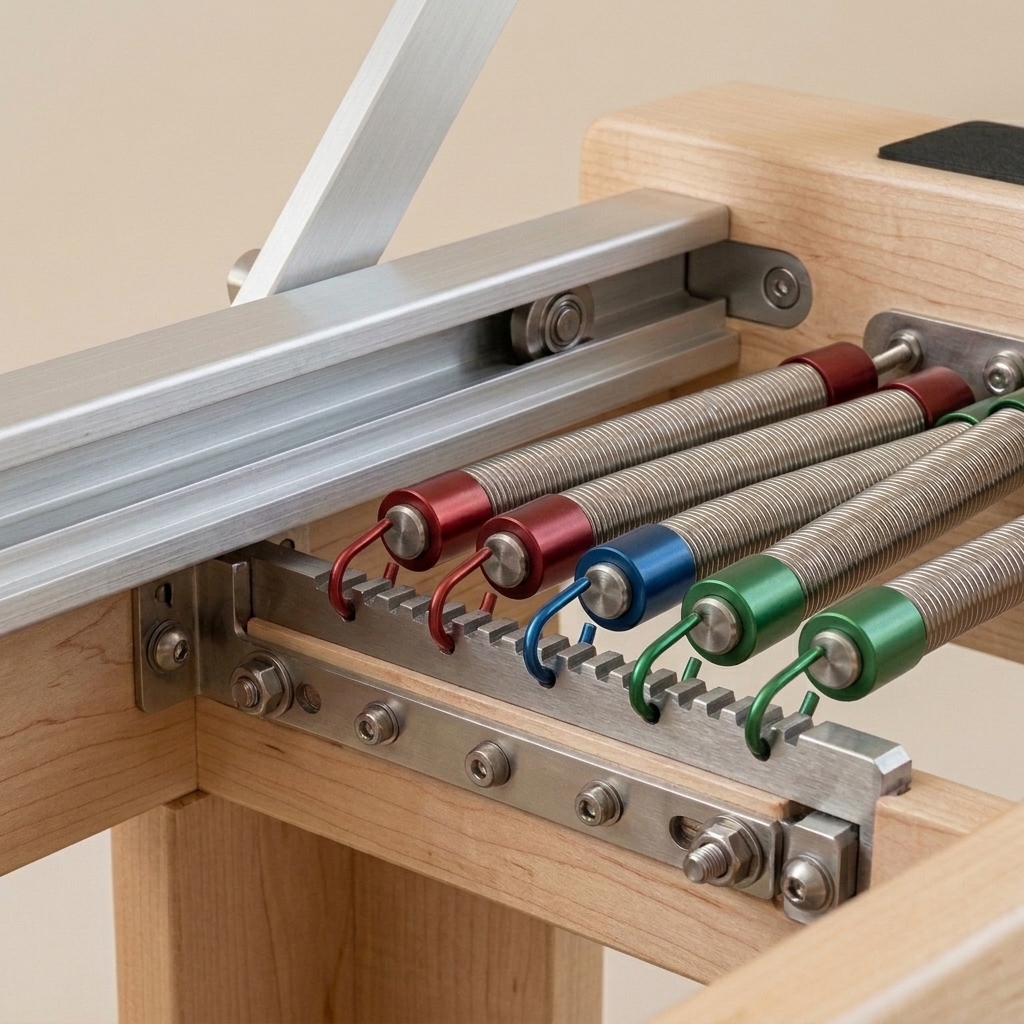
| Resistance mechanism | Elastic bungee cords or uncalibrated generic coil springs | 5 calibrated high-carbon music-wire springs with color-coded bands & safety hooks |
| Footbar & gearbar adjustment | Lightweight welded tube with thin pin notches that flex | Heavy tubular steel footbar with positive-lock multi-angle plate & solid gearbar |
| Carriage travel length | Short 820–900 mm travel (restricts taller clients >178 cm) | Full studio 980–1,060 mm glide length for tall & athletic clients |
| Upholstery & padding | Soft low-density PU sponge & thin PVC vinyl (cracks fast) | High-density layered EVA/PU studio foam + hydrolysis-resistant microfiber leather |
Frame mass, corner joinery, and why recessed tracks stay quiet
In a group class where ten clients perform explosive jumpboard plyometrics simultaneously, frame mass is not wasted weight — it is acoustic damping. Lightweight 35 kg home beds creep across timber studio floors, chatter at the corner joints, and twist slightly out of square whenever floor levels vary by even 3 mm.
Commercial timber frames — such as our Nordic Maple Commercial Reformer — use thick solid hardwood rails reinforced with steel internal corner brackets so the track span stays dead-parallel year after year. Where studios prefer lighter repositioning or operate in humid coastal climates, a heavy-wall anodized aluminum commercial frame delivers equal rigidity without moisture movement. Compare both materials in depth in our Wood vs. Aluminum Commercial Reformer Guide.
8-wheel sealed bearing carriages vs. 4-roller consumer tracks
Clients may not know engineering terminology, yet every paying member immediately feels carriage quality during slow single-leg footwork or standing lunges. Consumer beds save cost by fitting four vertical rollers without side-stabilizer wheels. The moment a client places asymmetrical weight on one edge of the carriage, the carriage skews diagonally and scrapes against the rail walls.
True commercial carriages use an 8-wheel architecture: four load-bearing vertical polyurethane wheels paired with four horizontal side-guide rollers, all running on sealed precision bearings. Side-guide wheels hold the carriage centered down the track even during off-axis standing splits or kneeling scooter work, eliminating metal-on-metal binding and keeping the room quiet enough for cueing without shouting.
Calibrated springs, zero-play footbars, and quick-change gearbars
Three high-cycle hardware zones separate studio-ready machines from consumer toys:
- Calibrated music-wire springs (never bungee cords): Elastic cords on budget home beds stretch unevenly within weeks and snap unpredictably. Commercial springs use heat-treated high-carbon steel calibrated across distinct heavy, medium, light, and extra-light resistance levels so an instructor calling “one red and one blue” gets identical feel across all 10 beds. Learn safe inspection schedules in our Commercial Spring & Maintenance Guide.
- Zero-flex footbar locking plates: A 100 kg client pressing into bridging or heavy footwork generates significant horizontal shear against the footbar. Commercial locking plates engage cleanly on both sides of the frame without twisting or slipping mid-rep.
- Standing-height & multi-position gearbar: Commercial gearbars shift effortlessly between 3 to 4 positions (plus matching stopper pins) so 155 cm and 195 cm clients achieve proper hip flexion without awkward spinal compression.
Layered studio foam & hydrolysis-resistant microfiber upholstery
Home Reformers often look plush on day one because they use thick, airy furniture sponge wrapped in cheap PVC leatherette. In a commercial studio, soft sponge bottoms out under knees and elbows during quadruped planks — hurting client joints — while cheap PVC peels and cracks after 300 wipes with studio sanitizing sprays.
Commercial upholstery pairs a firm, closed-cell EVA base layer with a resilient medium-density top comfort layer wrapped in commercial-grade microfiber leather. It rebounds immediately after a 10-class day, grips grip-socks safely without slipping, and resists sweat salt, body oils, and pH-neutral studio cleansers over multi-year cycles. Even when a multi-use studio or resort requires folding storage, the PILORA Foldable Commercial Reformer retains commercial-grade foam, springs, and a reinforced center locking hinge instead of cutting corners to consumer weight targets.
Frequently asked questions on commercial vs. home Pilates Reformers
Can a foldable Reformer ever qualify as true commercial studio equipment?
Yes — provided it is engineered specifically for commercial loads with a machined center locking hinge, full-length continuous track alignment when unfolded, commercial springs, and an 8-wheel carriage. Avoid thin consumer folding beds under 40 kg that flex or leave a noticeable bump across the mid-rail seam during carriage glide.
Why are commercial Reformers usually taller off the floor than home Reformers?
Standard commercial studio beds sit around 360–400 mm frame height (vs. 220–260 mm on low-profile home beds). Proper commercial height makes getting on and off safer for prenatal, older, and rehab clients, gives instructors ergonomic posture when spotting, and keeps spring adjustments effortless.
How can I verify commercial build quality when ordering remotely from a factory?
Request exact net frame weight (kg), close-up photos of the underside 8-wheel carriage assembly, aluminum rail wall thickness, spring coil wire gauge, and a continuous unedited video showing unloaded carriage glide and heavy footbar push-testing prior to shipment.
Summary: five non-negotiable mechanical specs for any commercial studio bed
Before committing capital to any Reformer fleet, confirm five non-negotiable commercial fundamentals: heavy rigid frame mass (58–78 kg), anodized extruded aluminum recessed tracks, an 8-wheel sealed bearing carriage with horizontal side-guides, five calibrated music-wire springs with positive footbar locks, and layered high-density studio foam wrapped in commercial microfiber. Explore all eight commercial-grade PILORA machines in our full commercial catalog or compare studio packages built for daily group timetables.
Compare Commercial Maple, Walnut, Aluminum & Foldable Chassis
Review full dimensions, carriage travel, spring setups, and request an unedited Xiamen workshop glide video before ordering.
Leave a Comment or Ask a Studio Question
Only your email address is required (never published). Your note is forwarded straight to our team for review and email follow-up.